Thru-Hiking to Marathon Pipeline
Thru-hiking to participating in a marathon. A relatively easy transition. This is not a unique phenomena to me. I have seen it over and over again with thru-hiking friends that they continue to “level up” and add running to their repertoire. A lot of folks go directly into trail running as it merges hiking and running, but I chose to do a road race first. I believe this is because there are many principles that are applicable from one endurance activity to the next.
Prior to the Pacific Crest Trail, I had been told to believe that the only way to truly be “in shape” was to be a runner. Like, a marathon runner. The rhetoric that I heard over and over again was that people who did weekend 5ks weren’t actually “runners” but rather they were just people who ran. As a musician, this did not make sense to me. In my mind, if someone plays an instrument, then they are a musician. It should be the same for other hobbies; including running. If you run, you are therefore a runner.
I was never an endurance athlete. When I completed my first 5k in 2014, I was shocked that I completed it at all. I went on to participate in a Sprint Triathlon in 2015 and although it was entertaining, I remember leaving the race saying, “I am just not an endurance person”. For over a decade, it was engrained in me that unless my body/cardiovascular system could support running consistently 5-6 days a week, I was out of shape. But I liked lifting weights, yoga, biking, hiking, going on walks… was I always out of shape then?
Thru-hiking completely changed my mind and my body.
I now believe that though running is a fantastic way to improve your cardiovascular health and overall body tone, that there is more to fitness (and life) than running. It is a component of my active lifestyle rather than the focus. I use it as a tool in my overall training toolbox, but it isn’t the main driver.
I completed my first half marathon in October 2024 with little training and (just) hit my time goal of sub-2 hours. It was an obvious next step in 2025 after another thru-hike to therefore sign up for another race - this time a full marathon in October 2025.
So.. how did it go?
Race Day
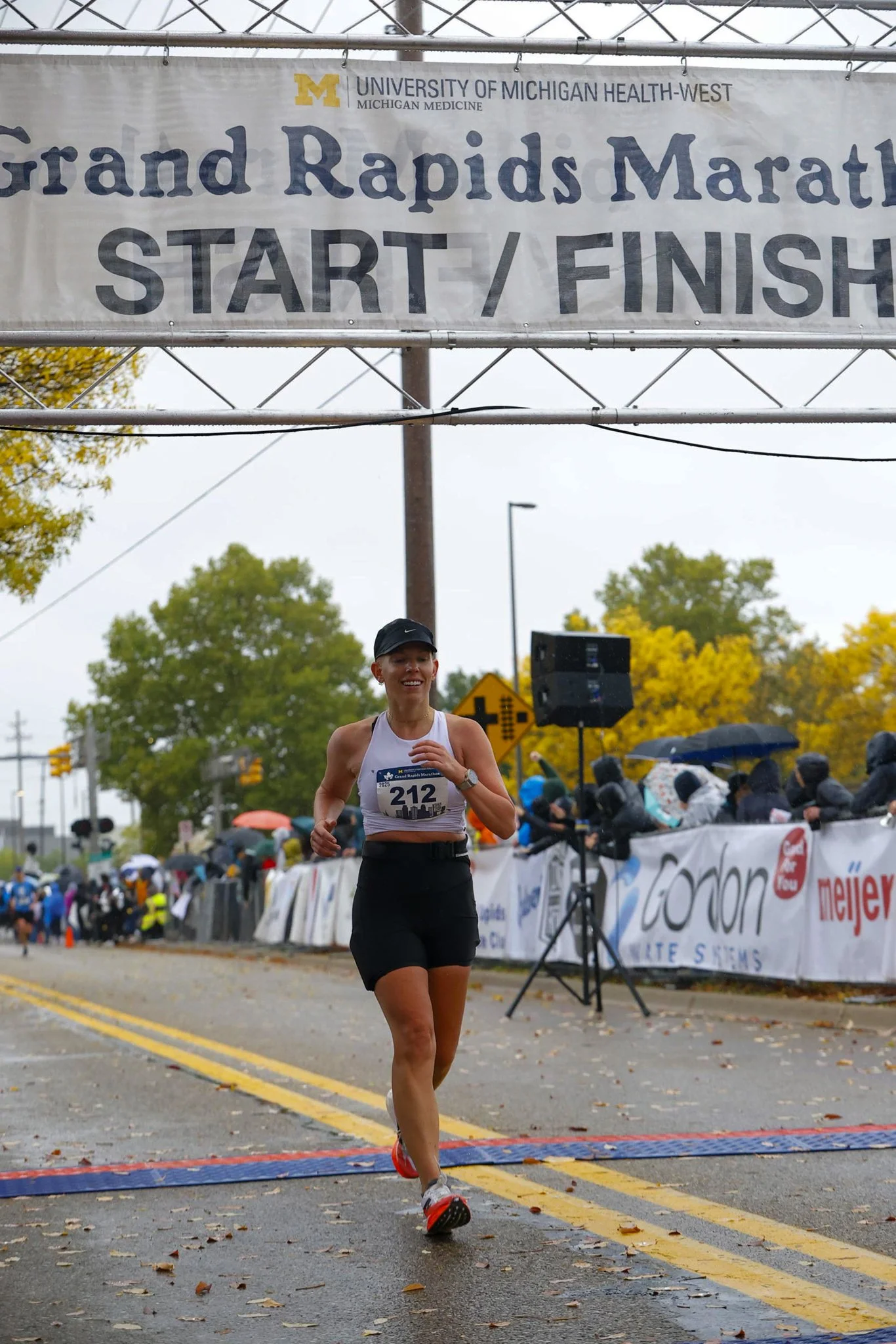
Truthfully, I didn’t know what to expect from my first marathon. My training window was short (four weeks), my summer was full, and my focus was… scattered. But with a few long runs and steady consistency, I showed up on race day with cautious confidence and completed the marathon with my goal time.
Original goal: 4:44
Revised goal: 4:30
Actual finish: 4:07 😱
Race day delivered cold rain and zero mercy. But there was never a moment that I thought I would quit or needed to stop. I ran the entirety of the race - a goal I did not know that I had but it was sweet! To be able to run 4+ hours without stopping was a testament to the endurance that thru-hiking trained into me. It was a treat as well to be on the same course I was the year prior completing the half marathon and rather than turning around at a specific point, continuing on into the unknown.
-
Distance
A running shoe-store salesman warned me that the hardest part for many runners is simply knowing they’ll be out there for 26 miles. But thanks to thru-hiking, I have lived many 26-mile days. Even many back to back 26-mile+ days. This was not intimidating to me, it was just another day.
Time on Feet
Though I had previously completed 26-mile days, running them would actually be much less time on feet. On an average quick hiking pace day, 26 miles would take nearly 9 hours. 9 hours of walking with a weighted pack on, on uneven surfaces. With my original goal being less than 4:30, this would be half the time.
Nutrition
At the beginning of my running journey, I was unable to consume anything (water or food) within 45 minutes - 1 hour prior. But with thru-hiking, I became used to eating and drinking while walking or climbing which made my stomach stronger. This helped with one of my biggest concerns; fueling.
Fueling properly during actvity was initial hard to wrap my head around because running had always been a way to lose weight. So consuming calories seemed counterintuitive. But you cannot properly perform if you are completely empty of calories. And over the course of 4+ hours that I would be running and burning an insane amount of calories, I had to replace them. This was a huge mental shift. I am running a marathon to perform… not to lose weight.
Mental Game
Already knowing that I was capable of running/walking 26 miles was a huge relief. I kept saying that though I would like to continuously run, who would that actually impress? Who would I be running constantly for? If I needed to walk for a bit (or for a lot), who would care?
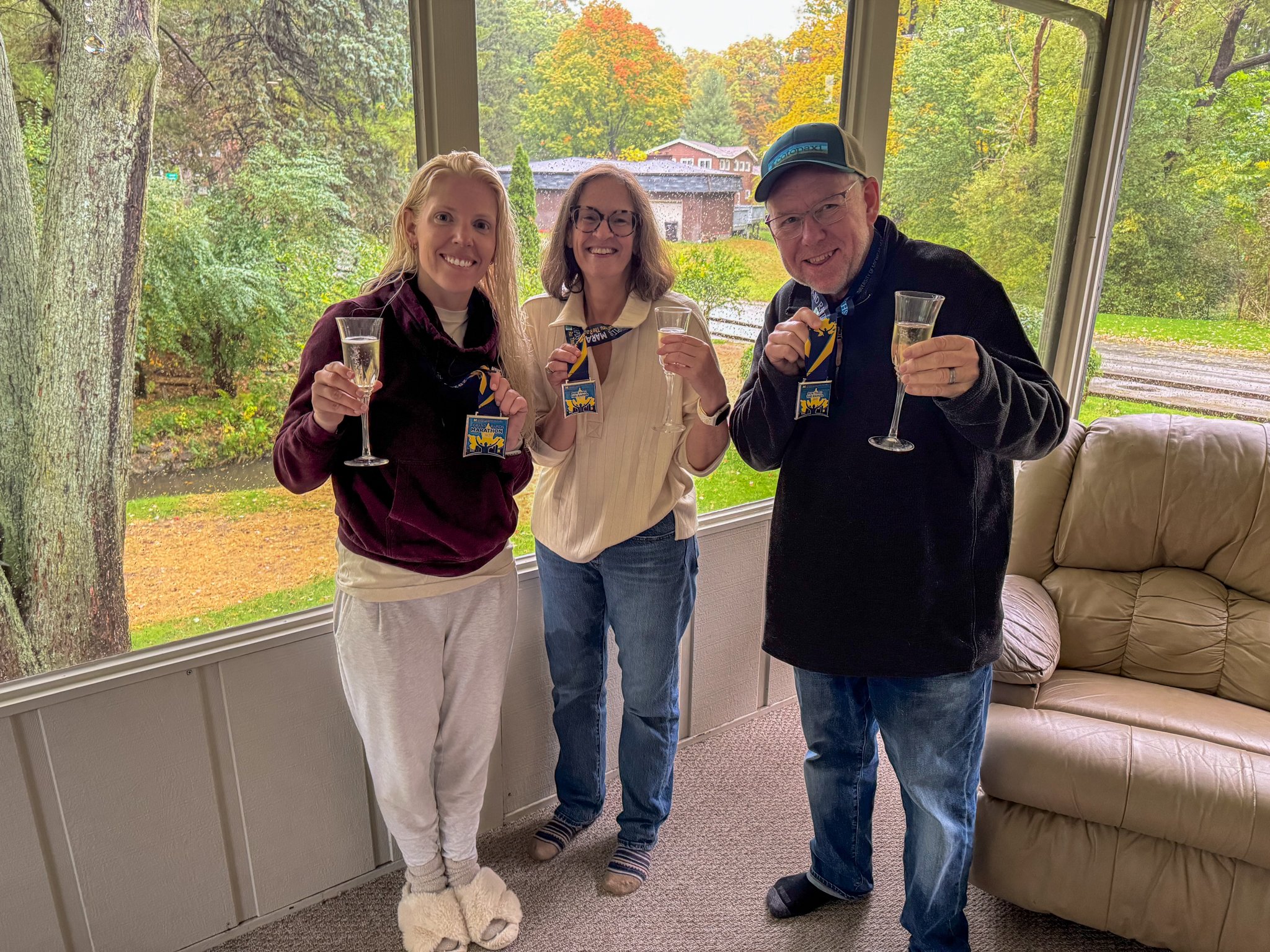
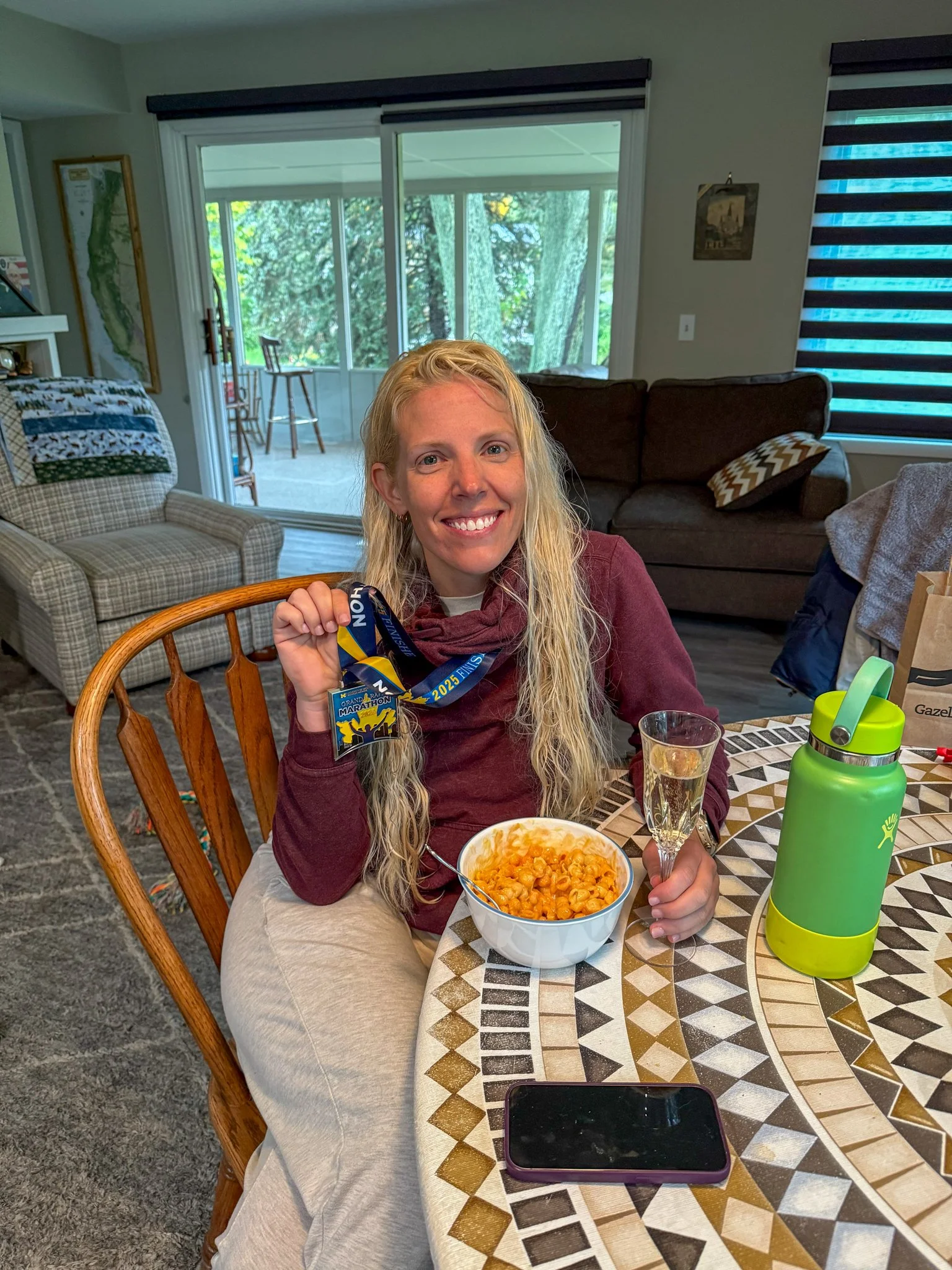
I giggled my way through the final mile, especially when I spotted my mom, aunt, and uncle cheering in ponchos near the finish. And as I crossed the line, I felt overwhelming gratitude for the support around me, and most of all, for my body. She continues to show up for me, even when I ask a lot of her.
Muscle Recovery
Because thru-hiking is constant daily activity with often few breaks or days off WHILE eating generally inappropriately, my muscles were trained to deal with what I gave them. Hey, even flowers can grow through cracks in the sidewalk.
This quick muscle recovery was helpful during my training regimen because I was then able to be consistent. Day over day, week over week.
Elevation
Thru-hiking incorporates an obscene amount of elevation gain and loss (looking at you, Appalachian Trail) and as a road race runner, this was not the case. When I saw that my race was going to be roughly 500-750ft of gain over 26.2 miles, it felt completely doable.
-
Bathroom Breaks
One of my favorite parts about long distance hiking is that I can pee whenever/wherever I want (typically). I was nervous that within a 4+ hour timeframe I was going to be in desperate need of a bathroom - any kind of use…
My long runs included bathroom breaks, but my actual marathon did not. I’m not sure if this was a good thing or not as it probably indicated that I was dehydrated but ya know.
Consistent Pacing
My hiking pace varies wildly depending on the terrain type, steepness, time of day, etc. I attempted to be as consistent as possible but struggled a bit during training to keep it consistent.
Different Muscles
Yes, I had good muscle recovery but the initial runs during my transition from hiking to running were a bit painful. Thankfully I have no joint pain, but it was my underutilized quads from hiking that were really awoken on my running journey.
-
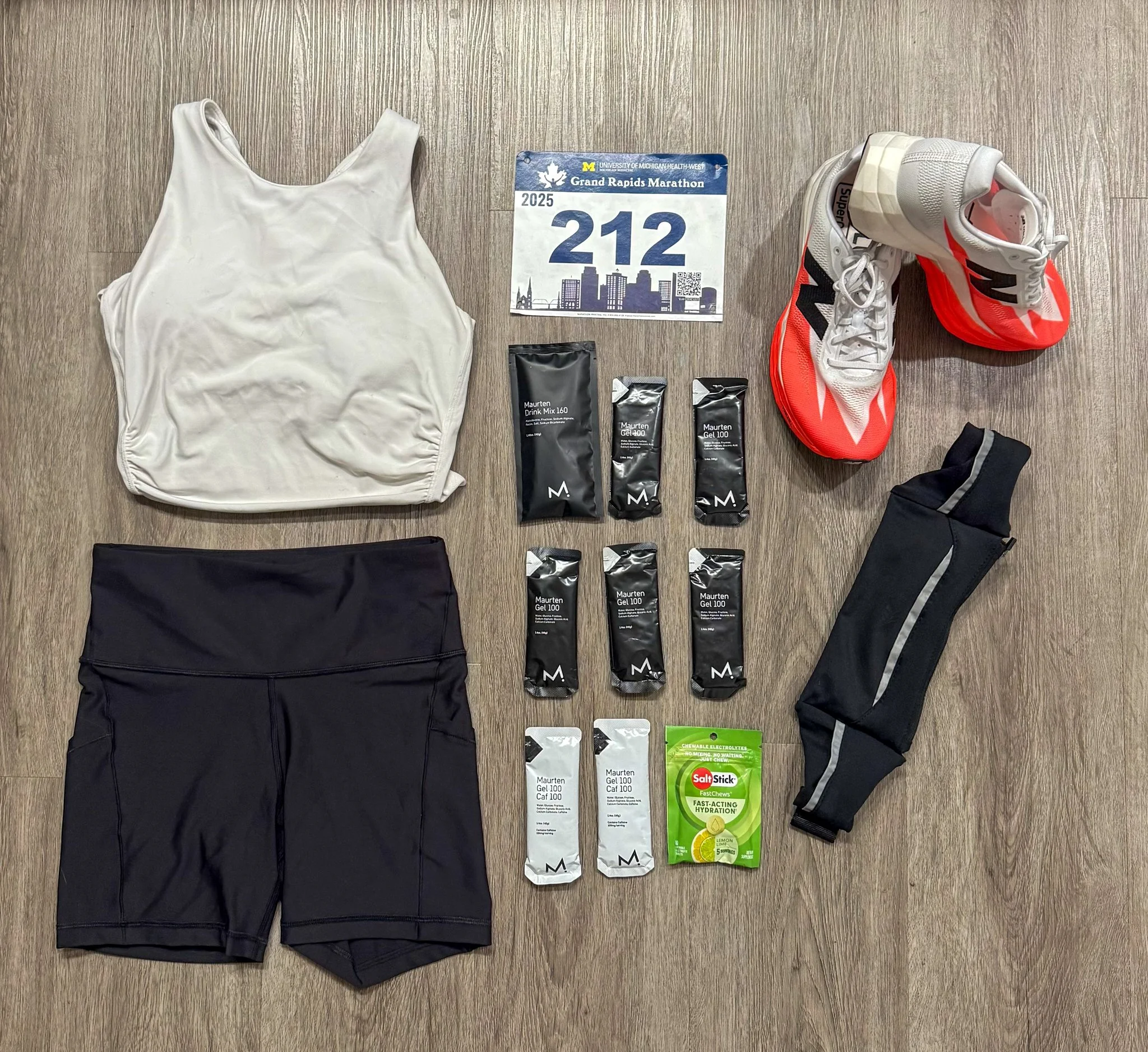
Considering I had never truly fueled on a run before, I was lost. For my half marathon, I did not use anything. I mean… anything. I didn’t drink any water provided nor any other items. I could push my way (fake it?) through a half marathon, but not a full marathon. A runner friend with a sensitive stomach recommended Maurten gels and they worked perfectly. To supplement, I also used SaltStick tabs, which are electrolyte tabs, to chew on as well recommended to me by my Aunt (who was running her first 5k simultaneously)! I tested out these gels and tabs on a few of my long runs and it went smoothly, so I committed to them for the race.
My race nutrition by mileage:
Pre-race: Maurten 160 drink mix
3: tab
6: gel
8: tab
10: caffeine gel
12: tab
14: gel
15.5: tab
17: gel
18.5: tab
20: caffeine gel
21.5: tab
23: gel
24.5: tab
26.2: whatever I want!
I never cramped, bonked, or felt weak. I drank a few cups of water but kept liquids to a minimum as that hurts my stomach worst of all of anything I consume. This plan completely worked for me, but test out what may work for you!
-
My gear did not differ from my regular running kit too much. Pictured below is my marathon kit for the day.
SHOES
I trained with my regular Nike Pegasus and then switched to a “super shoe” for race day with New Balance SuperComp. Though folks at the running store tried to talk me out of super shoes because I “wasn’t fast enough to see a difference in time” - they made a huge difference for my knees. I wouldn’t train too much in these, but a few runs beforehand is okay. There was a total of 8 miles on my New Balance SuperComps prior to race day.I would recommend going to a run specialty store and trying on different shoes with a sales associate. Every foot and body has different needs!
VEST/BELT
I brought my usual running belt to the marathon with me and I was able to fit all of my nutrition in there and my short pockets. Some folks had running vests on, but I wanted to run as free as possible after thru-hiking with my backpack. I felt so light!
-
As previously stated, I did not have much to properly train for running a race. I had four weeks to get running mileage in prior to the marathon but primarily used my thru-hiking shape. I did several long run/hikes on trails - which lead to a Michigan FKT (fastest known time), but more on that in a different post.
I ran consistently for those four weeks integrating in running 5 days a week; one long run, one fast run, and three moderately pace/distance runs.
Longest long run: 21 miles followed by 15 miles the following week
Fastest run: 5k time trial (3.1 miles)
Typical moderate pace/distance run: 6 miles
As a way to make myself feel more comfortable, I KNEW I could walk 26 miles so I would get through it. Everything else is just fun.
Will I be completing another marathon in the future? Yes. I said it the day of my marathon, yes I will complete another. This was my first marathon but not my best.
Consider a thru-hike though, it will change your fitness. It would be an understatement to say that thru-hiking turned me into one. I now cannot imagine my life without having some endurance effort on the calendar.
xoxo,
Leeann